Events in 2025

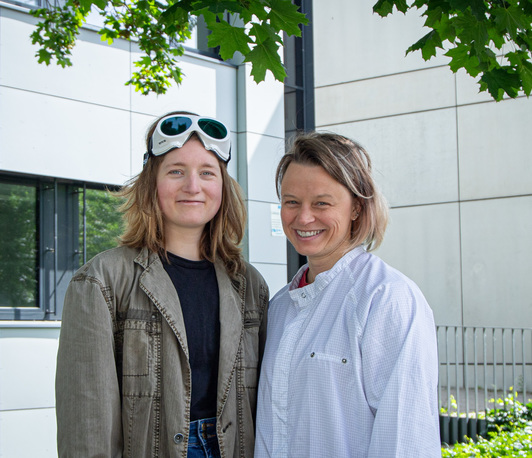
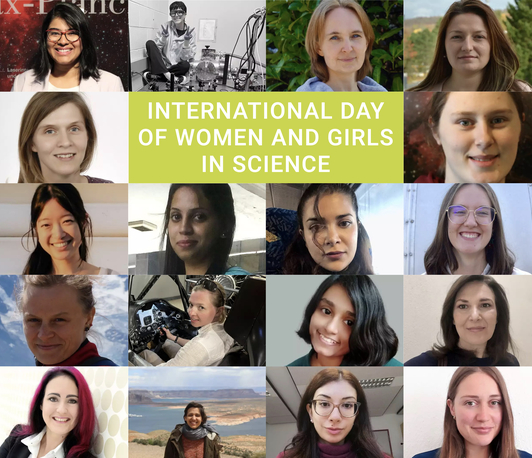
International Day of Women and Girls in Science

Public Event
  • Start: Feb 11, 2025
  • End: Feb 12, 2025
  • Location: online
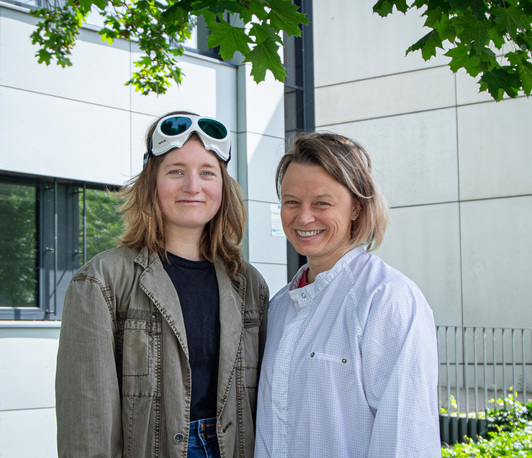
The 11th of February marks the United Nations' International Day of Women and Girls in Science. The Max Planck Institute for Gravitational Physics and the Institute for Gravitational Physics at Leibniz University Hannover celebrate the event by highlighting female researchers and their work at the institutes. [more]
Public talk about astronomy with gravitational waves, the cosmic symphony, and the search for hidden melodies. [more]
Almost ten years ago, on September 14, 2015, a new era of astronomy began. Since then, we have been observing the Universe in a completely new way: with gravitational waves. [more]

Public talk at Hörfidelity (in German) “Gravitational-wave astronomy: we can hear the dark Universe!”

Public talk
Public talk by Karsten Danzmann at “HörFidelity: Experiences and Information about the Ear”: For thousands of years, we have been looking at the Universe through our eyes. But over 99% of the Universe is dark and will never be observed with electromagnetic waves. Since September 14, 2015, everything has changed: gravitational waves have been discovered! We have been given a new sense and can finally hear the dark side of the Universe. [more]

Girls' Day 2025 at AEI Hannover

Girls' Day
On 3 April 2025 the Max Planck Institute for Gravitational Physics (Albert Einstein Institute) in Hannover participates in the Girls' Day. [more]
For thousands of years, we have been looking at the Universe through our eyes. But over 99% of the Universe is dark and will never be observed with electromagnetic waves. Since September 14, 2015, everything has changed: gravitational waves have been discovered! [more]
On September 14, 2015, a gravitational wave was detected for the first time, originating from the merger of two black holes. Less than two years later, this great success was honored with a Nobel Prize. Since then, a lot has happened and the field of research continues to develop rapidly. [more]

Why is spacetime curved?

Public Event
In a performative exhibition with elements from the fields of music, projection, installation, and experimental video art, the artists address some questions in physics. [more]

Why is spacetime curved?

Public Event
In a performative exhibition with elements from the fields of music, projection, installation, and experimental video art, the artists address some questions in physics. [more]

Potsdam Science Day (Potsdamer Tag der Wissenschaften) 2025

Public Event
  • Date: May 10, 2025
  • Time: 01:00 PM - 07:00 PM (Local Time Germany)
  • Location: Potsdam Science Park
  • Topic: Open day
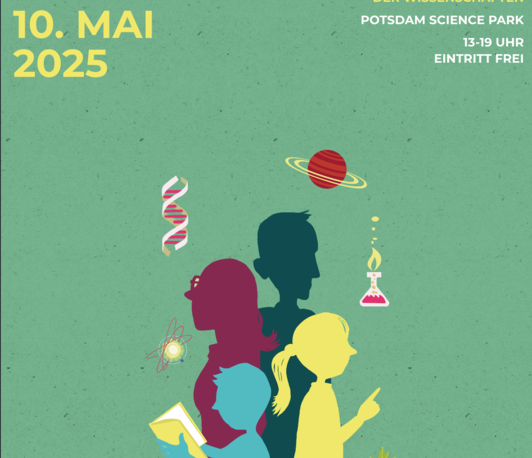
The Max Planck Institute for Gravitational Physics participates in the Potsdam Science Day on 10 May 2025, 1pm - 7pm. Location: Potsdam Science Park [more]
Since 14 September 2015, we have been exploring a previously unknown part of the universe with the help of vibrations of space-time: gravitational waves. [more]

30th anniversary of the institute

Anniversary
The Max Planck Institute for Gravitational Physics (Albert Einstein Institute) was founded in 1995 by the Max Planck Society for the purpose of pursuing research into the fundamental laws of gravitation. We can look back on 30 successful years. We will celebrate the 30th anniversary of the Institute on 3 June 2025 – together with current and former staff, scientists and friends. [more]

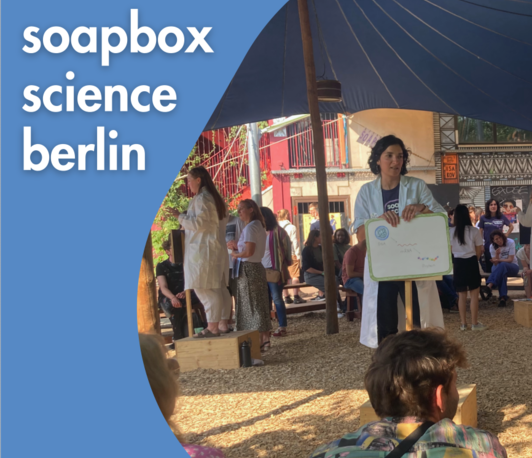
Soapbox Science Talk: Listening for Black Holes: Studying the Invisible with Gravitational Waves

Public talk
Twelve brilliant women in science will give short, engaging talks about their work. There will be no slides or screens; just powerful ideas and real dialogue. [more]

Karsten Danzmann is on DAS!, on the red sofa (German TV)

television broadcast
  • Date: Jul 25, 2025
  • Time: 06:45 PM - 07:30 PM (Local Time Germany)
  • Topic: Discussion and debate formats, lectures
Karsten Danzmann gives an interview to Norddeutscher Rundfunk on the program DAS! about gravitational waves and what we can learn about the universe by measuring them. The interview will be broadcast by NDR on 25 July 2025 at 18:45 and on 26 July 2025 at 05:15. [more]
A straight glowing trail runs across a starry background.

Public talk (in German) „Perseids: Comet crumbs and meteors“

Public talk
The public talk opens the stargazing night on the Waldberg Empelde. It explains the scientific background of the annual Perseid meteor shower, which occurs every August. It causes many shooting stars in the nights around August 12. [more]
Logo of the Maker Faire Hannover.

Einstein@Home at the Maker Faire Hannover

Exhibition
Einstein@Home is a distributed open-source computing project in which volunteers use their computers to make astronomical discoveries and unlock the secrets of the cosmos. [more]

Open Day at GEO600

Open Day
On Saturday, 23 August 2025, the Max Planck Institute for Gravitational Physics (Albert Einstein Institute) and the Institute for Gravitational Physics of Leibniz Universität Hannover invite you for the tenth time to visit the German-British gravitational-wave detector GEO600 near Sarstedt. [more]
The Astro & Co logo.

Online talk (in German) “Astro & Co: 10 years of gravitational-wave events”

In the online discussion “Astro & Co” hosted by Haus der Astronomie, Jan Steinhoff talks about 10 years of gravitational-wave astronomy. [more]
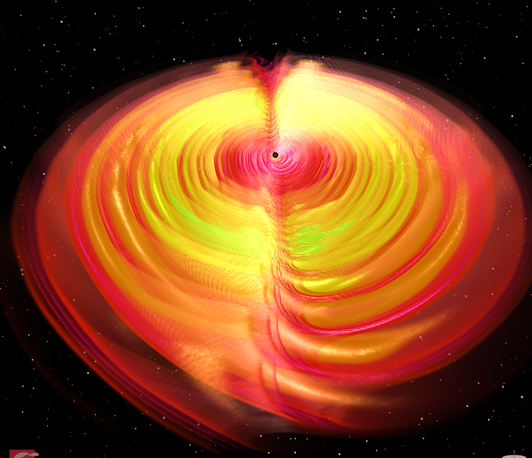
Visualization of the numerical simulation of gravitational waves from merging black holes.

10 Years of gravitational-wave astronomy

Public Event
To celebrate the 10th anniversary of the first gravitational-wave detection, we will be taking part in the Long Night of Astronomy on September 13, 2025, at the Zeiss Großplanetarium in Berlin. [more]
Against a starry background, a black hole has shredded a neutron star into a yellow trail of matter.
What have we learned about the universe since 2015 through gravitational waves? [more]
Red spiral design with text: "In Pursuit of Gravitational Waves" and "Solving the Two-Body Problem in General Relativity," illustrating scientific concepts.

Workshop: In Pursuit of Gravitational Waves - Solving the Two-Body Problem in General Relativity

Workshop
A decade after the first gravitational-wave detection, this workshop brings together physicists, historians, and philosophers to explore the evolving history of the relativistic two-body problem—tracing how research traditions, institutional contexts, and collaborative dynamics have shaped one of general relativity’s deepest challenges. [more]
Comic-style illustration of a bear in a space suit on Mars. A rocket in the background. Above it, two red signs with white lettering reading “Mars, Moon, and Gravity” and “From October 16 to 30 October”.

Public talk (in German) as part of the space exhibition

Public talk
As part of the space exhibition “Mars, Moon, and Gravity” from 16 to 30 October 2025, at the A2 Center, there will be an entertaining evening lecture event. Karsten Danzmann will report on LISA, the space observatory for gravitational waves. [more]
A round satellite stands against a starry background, emitting a red laser beam and receiving a red laser beam.

Public talk (in German) “Gravitational-wave astronomy with LISA”

The LISA satellite mission will revolutionize our view of the cosmos [more]
For thousands of years, we have been looking at the Universe through our eyes. But over 99% of the Universe is dark and will never be observed with electromagnetic waves. Since September 14, 2015, everything has changed: gravitational waves have been discovered! [more]

Night of Science 2025

Public Event
On 8 November 2025, it's time for a night of science: From 5 p.m. to 11 p.m., anyone interested is invited to discover Leibniz University Hannover at its various locations. The Max Planck Institute for Gravitational Physics (Albert Einstein Institute) and the university's Institute for Gravitational Physics will participate. There will be no livestream of this event. [more]
A large technical device made of silver and gold metal in a laboratory. In the background, there are monitors and measuring instruments.

Public talk (in German) “Science at the “coolest” place in Hanover”

How does a super freezer generate temperatures below -273 °C – and what is it used for? [more]
Against a starry background, a black hole has shredded a neutron star into a yellow trail of matter.

Public talk (in German) “10 years of astronomy with Einstein's gravitational waves”

What have we learned about the universe since 2015 through gravitational waves? [more]
A journey through the physics of gravity, from classical mechanics to Einstein’s theory of relativity, via the practical applications of gravity measurements. The number of participants is limited. Registration by 10 November 2025, at the latest, with Michael Smykalla, tel. 0511-7244260. [more]
Photo of the sun low on the horizon, distorted with a red (lower) and green (upper) fringe.

Public talk (in German) “Light and color in nature“

Colorful spectacles in the sky – how they form and how to observe them. [more]
A black circle stands out against a brown-blue, nebulae-covered starry background, distorting the background. Inside the black circle are the words “That's no black hole.”

Public talk (in German) “That’s no black hole”

Research and fiction: Do black holes really exist? [more]
Against a starry background stand the Earth, a satellite (labeled “LISA Pathfinder”) and a laser triangle (labeled “LISA”).

Public talk (in German) “10 years after LISA Pathfinder: sensational results for the LISA mission”

LISA Pathfinder paved the way for measuring gravitational waves in space. [more]
A laser triangle with three satellites, the solar system, and a distant galaxy stand against a wavy background.

Public talk (in German) “LISA – Giant space observatory”

LISA will observe gravitational waves in space with contributions from Hanover. [more]
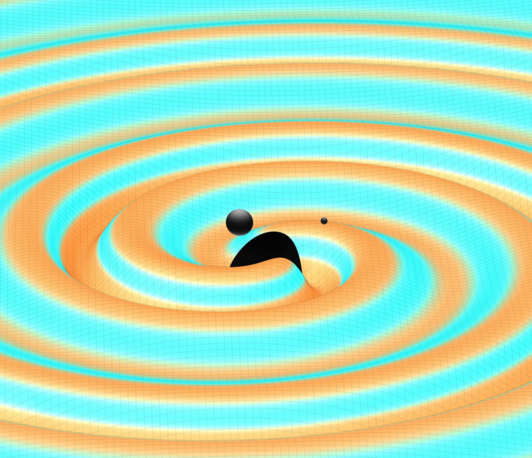
Two black holes against a rippled background in turquoise and orange.
Public talk on the past, present, and future of astronomy with gravitational waves. [more]

GWSky kick-off meeting

Workshop
The GWSky kick-off meeting brings together all members of the ERC Synergy Grant project for their first workshop. [more]
Go to Editor View